Himeji and Kobe in one day: itinerary and travel
Himeji and Kobe lie on the same railway line west of Osaka, which makes this one of the easiest excursions in Kansai. The principle: the castle in the morning, when it is quietest, Kobe in the afternoon and evening, ending at the port with a beef dinner.
Sample schedule:
- 8:15am: leave Osaka or Kyoto.
- 9–11am: Himeji Castle.
- 11–11:45am: Koko-en Garden.
- 12–1pm: lunch in Himeji.
- 1:15–2pm: train to Kobe-Sannomiya.
- 2:15–4pm: the Kitano district.
- 4:30–6:30pm: Meriken Park and Harborland at sunset.
- 7pm: Kobe beef dinner, back to Osaka in 25 minutes or Kyoto in 50.
Travel:
- Osaka – Himeji: the shinkansen from Shin-Osaka takes about 30 minutes (Nozomi, Hikari or Sakura depending on the timetable). The JR Special Rapid (shinkaisoku) from Osaka Station takes about 1 hour, with no supplement or reservation: often the best value for time and money.
- Kyoto – Himeji: 45 minutes by shinkansen, 1.5 hours by Special Rapid.
- Himeji – Kobe: JR Special Rapid to Sannomiya in about 40 minutes, or shinkansen to Shin-Kobe in 15 minutes (Shin-Kobe Station is at the foot of Kitano, which can be handy).
- Kobe – Osaka: 25 minutes by JR Special Rapid; the Hankyu and Hanshin lines also link Sannomiya to Osaka-Umeda.
The Japan Rail Pass covers JR and the shinkansen along the whole route (excluding Nozomi without a supplement). Without a pass, an IC card is enough on regular trains; the shinkansen needs a ticket.
With a child or at a slower pace, you can reverse it: Kobe on the first day with a night in Kobe, Himeji the next morning. Or add Arima Onsen and stay in a ryokan (see below).
Himeji Castle: new 2026 fee, hours and visiting tips
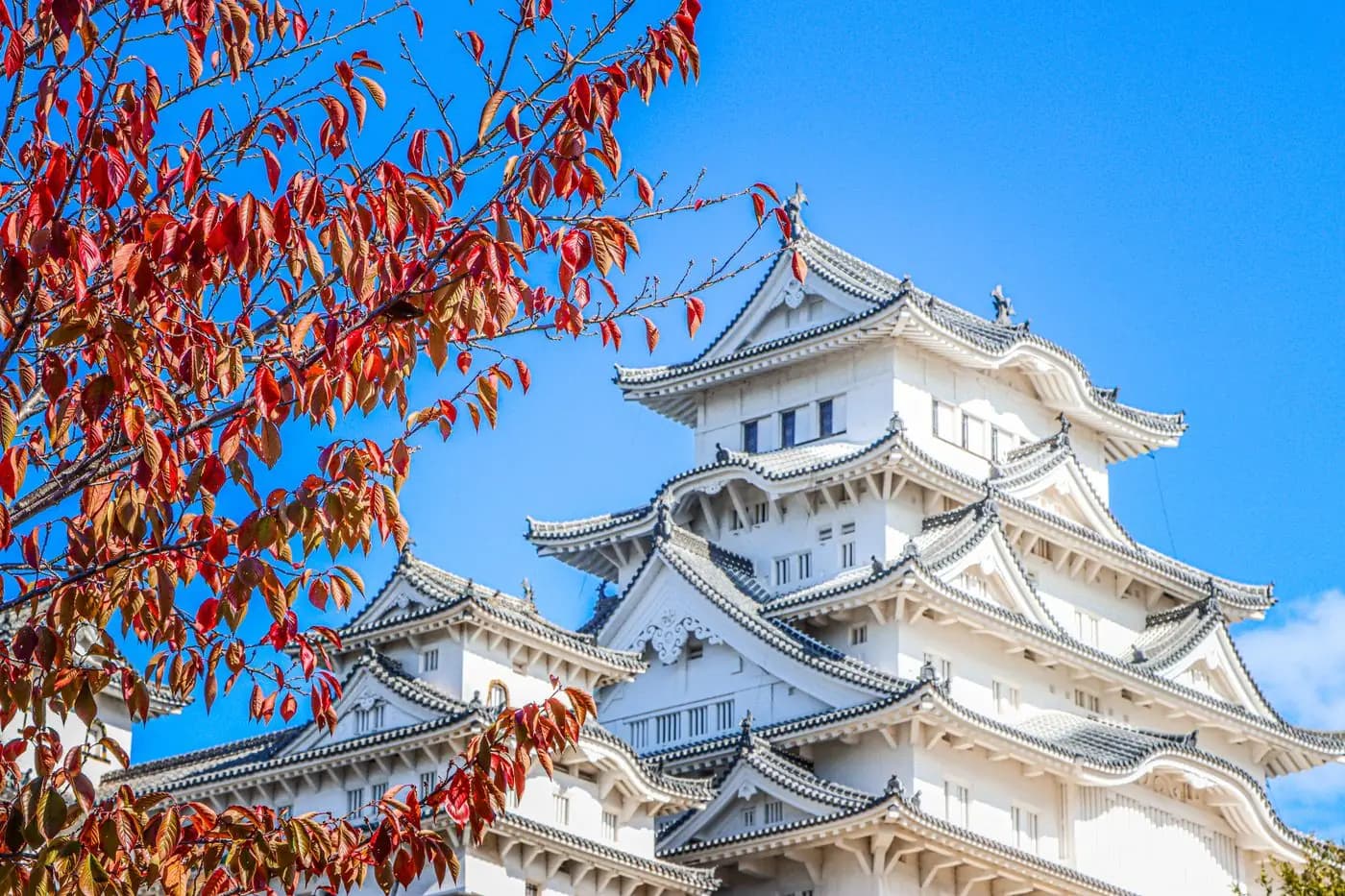
Himeji Castle is the finest original castle in Japan. Its main keep, completed in 1609, was never destroyed, neither by wars nor by the 1945 bombings that levelled much of the city. The first Japanese site inscribed on the UNESCO World Heritage list (1993), it owes its nickname "White Heron Castle" to its white plastered walls.
The new 2026 fee: since March 1, 2026, the city has applied two-tier pricing. Adults (18 and over) who do not live in Himeji pay ¥2,500, against ¥1,000 for city residents. All visitors under 18 get in free. The city justifies the increase by the cost of maintaining the site, estimated at tens of billions of yen over the coming decades. The combined castle + Koko-en ticket costs ¥2,600 for a non-resident adult, barely ¥100 more than the castle alone.
Hours: 9am–5pm (last entry 4pm), extended to 6pm (last entry 5pm) in summer. Closed December 29 and 30.
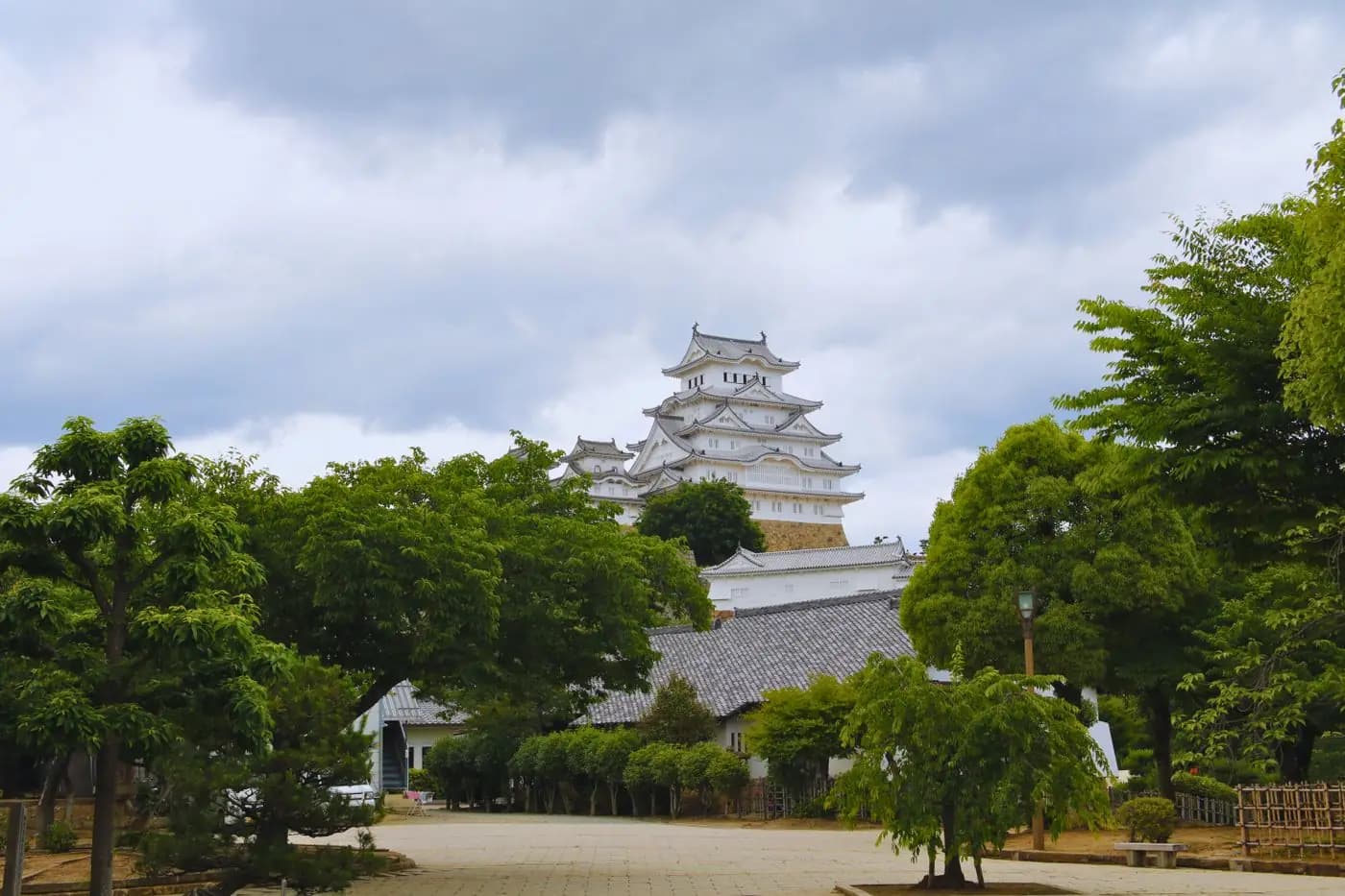
Access: 15 to 20 minutes on foot from the north exit of JR Himeji Station, straight up Otemae-dori. The castle grows as you walk; it is a fine introduction. Buses do the trip in 5 minutes.
The visit takes 1.5 to 2 hours. The route climbs through a maze of gates, courtyards and winding paths designed to disorient attackers, then enters the keep:
- Shoes off at the keep entrance, stored in a plastic bag provided, which you carry during the visit. Bring socks: the floors are cold in winter.
- Six floors linked by very steep wooden stairs, almost ladders. People with reduced mobility cannot go up the keep.
- No furniture: the interest lies in the framework, the huge pillars, the loopholes and the view from the top floor.
Tips: be at the ticket office at 9am. From 10:30am, especially in spring and during Golden Week, the wait to enter the keep can exceed an hour, and on the busiest days numbered tickets limit access. The best overall view is from the Sannomaru courtyard or, on your way out, from Otokoyama hill to the north-west (10 minutes' walk, far fewer people).
Koko-en and lunch in Himeji
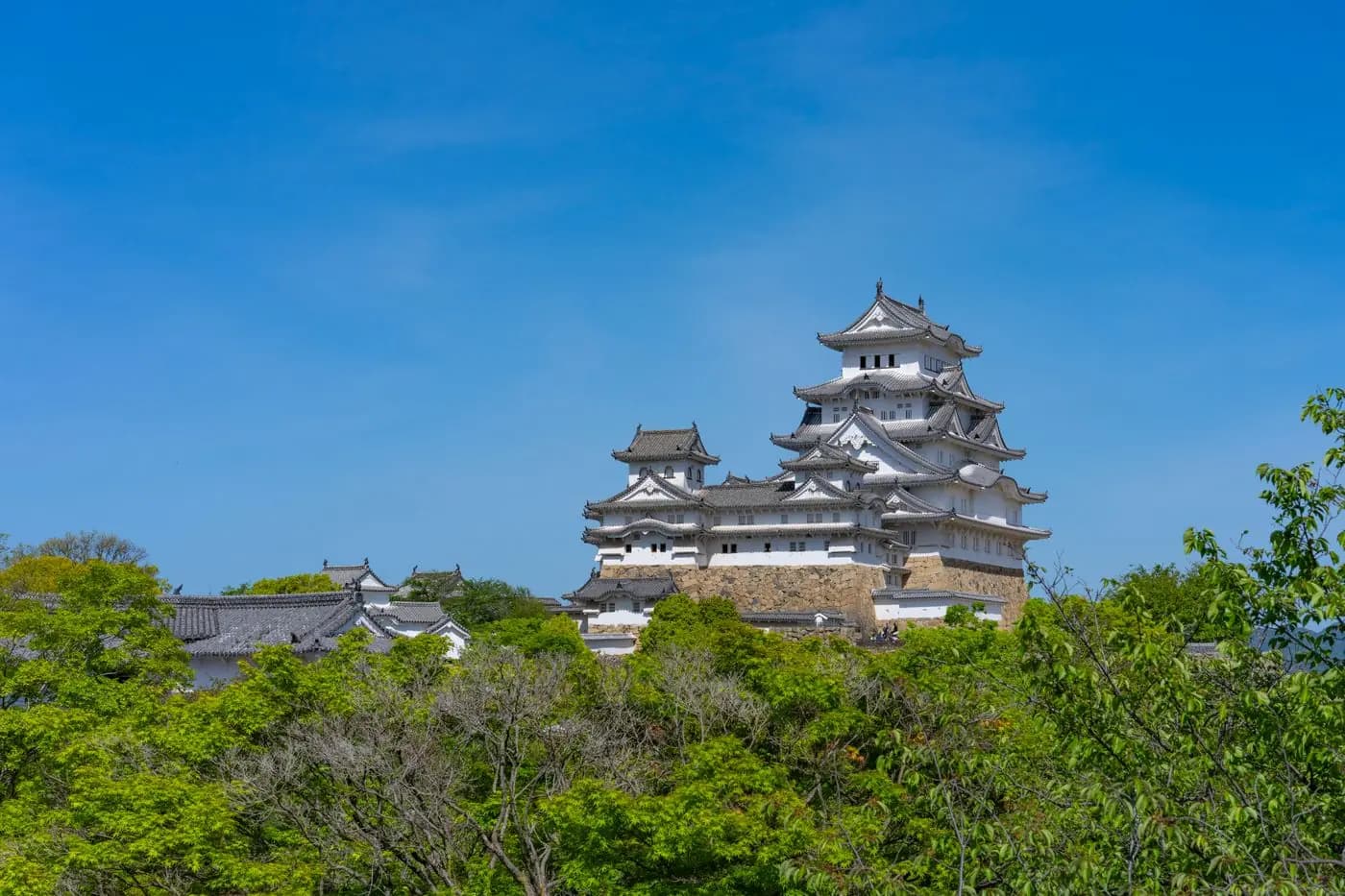
At the foot of the castle, on the site of former samurai residences, Koko-en Garden was created in 1992. So it is recent, but built using traditional techniques: nine enclosed gardens separated by earthen walls, each with its own theme (koi pond, tea garden, bamboo garden, summer garden, pines). You wander from one to the next in about forty minutes.
- Fee: ¥400 alone, or included in the ¥2,600 combined ticket with the castle (non-resident adult).
- Hours: generally 9am–5pm, with longer hours in summer and evening openings in autumn for the maples.
- Tea room: the Souju-an pavilion serves matcha with a wagashi for a few hundred yen, in a very calm setting. The garden restaurant, Kassui-ken, offers lunch overlooking the pond, including a dish of anago (grilled conger eel), a speciality of the Harima coast.
We recommend Koko-en after the castle rather than before: it settles you down after the busy visit, and you can see the keep rising above the walls, which makes for lovely photos.
Lunch in Himeji: Otemae-dori and the covered arcades around the station offer the most choice. Local specialities:
- Anago: grilled conger eel on rice, more delicate than freshwater eel.
- Himeji oden: Japanese hotpot, served here with a ginger soy sauce.
- Ekisoba: Chinese-style noodles in a Japanese broth, sold on the station platforms since the post-war years. Not gourmet, but very local and fast.
Restaurants near the castle are full from 12 to 1pm on busy days. If you are aiming for a train to Kobe around 1pm, eat at 11:45am or buy a bento at the station and eat it on the train (the Special Rapid has no tray tables, the shinkansen does).
Kobe in the afternoon: Kitano, Meriken Park and Harborland
Kobe is a port city squeezed between the sea and the Rokko mountains, opened to foreigners in 1868. That history shapes its character and can be read in two districts linked on foot.
Kitano (2:15–4pm): on the slopes north of Sannomiya (a 15-minute walk uphill, or 5 minutes from Shin-Kobe Station), foreign merchants and diplomats built Western-style houses, the ijinkan, in the late 19th and early 20th centuries. About twenty are open to the public, often charged individually or with combined tickets. The best known:
- Kazamidori no Yakata (the Weathercock House), in red brick, built for a German trader.
- Moegi no Yakata, the pale green house of an American consul, with a view over the bay.
Honestly, one or two houses are enough: interiors are often fairly similar. The pleasure lies mainly in wandering the sloping lanes, cafés and the small Kitano Tenmangu shrine, which overlooks the port. Comfortable shoes: it is uphill.
Down to the port (4–4:30pm): via Tor Road, a shop-lined avenue, then through Nankinmachi, the Chinatown, for a street snack (steamed buns, nikuman).
Meriken Park and Harborland (4:30–6:30pm):
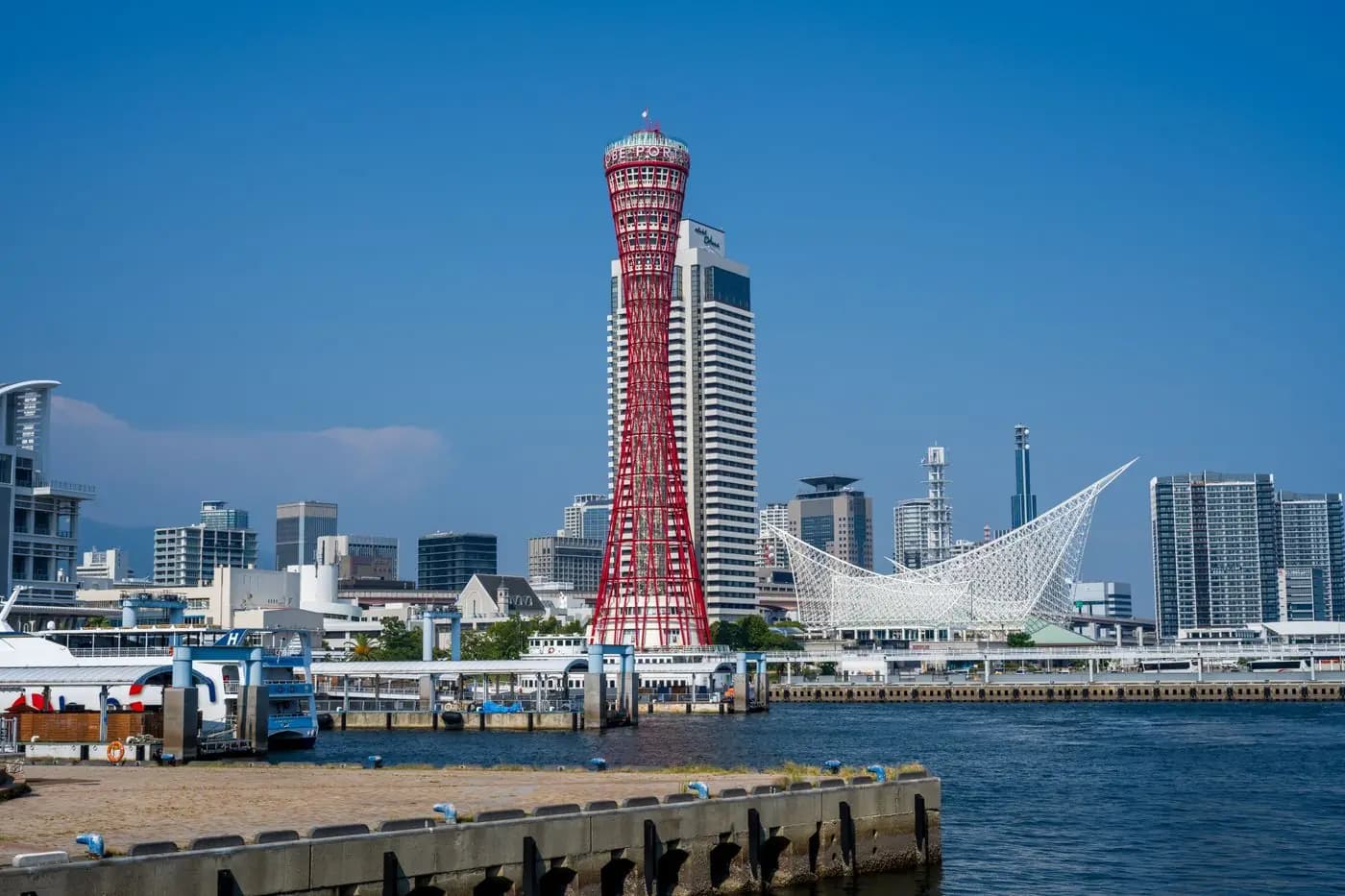
- Meriken Park brings together Kobe Port Tower (the red drum-shaped tower, renovated and reopened in 2024, with an observation deck and rooftop), the maritime museum with its white sail-shaped roof, and the 1995 earthquake memorial: a section of the collapsed quay has been left as it was. The Great Hanshin-Awaji Earthquake killed more than 6,400 people; this stop gives meaning to the visit.
- Harborland, just opposite, is a waterfront district of shopping centres and restaurants, with the Ferris wheel and Mosaic. At sunset, the view of the illuminated tower and museum from the Mosaic promenade is Kobe's postcard.
- Bay cruises of 40 minutes to 1 hour leave from Harborland and Meriken Park; some include dinner.
Kobe beef: how to recognise the real thing and what to budget
The name "Kobe beef" is used all over the world, often wrongly. Genuine Kobe beef is a designation controlled by an association of producers and distributors in Hyogo Prefecture:
- it comes from purebred Tajima cattle born and raised in Hyogo Prefecture;
- the carcass must reach a high level of marbling and quality, within a weight limit;
- each animal receives an identification number, and the restaurant can show a certificate matching the meat served.
Approved restaurants display a plaque or bronze statuette of a bull, and often the certificate with the animal's nose print. If the menu says "wagyu" or "kuroge wagyu" (Japanese Black) without mentioning Kobe, it is good meat, but not Kobe beef. There is nothing wrong with that, and it is much cheaper; you just need to know what you are ordering.
How to eat it: most restaurants serve it teppanyaki, cooked on a griddle in front of you, in small pieces, with salt, pepper, fried garlic and grilled vegetables. Order it rare or medium: well done, the fat melts away and the flavour fades. Portions are small (100 to 150 g): the meat is very rich, and that is intentional.
Budget (2026 orders of magnitude):
- Lunch: Kobe beef set menus from around ¥6,000 to ¥10,000 at accessible places, ¥15,000 and up at renowned houses.
- Dinner: ¥20,000 to ¥40,000 per person, more for the top-graded fillet or sirloin.
Lunch is often better value. Sannomiya and Kitano have the most restaurants; the most popular tables are booked several weeks ahead, especially at weekends.
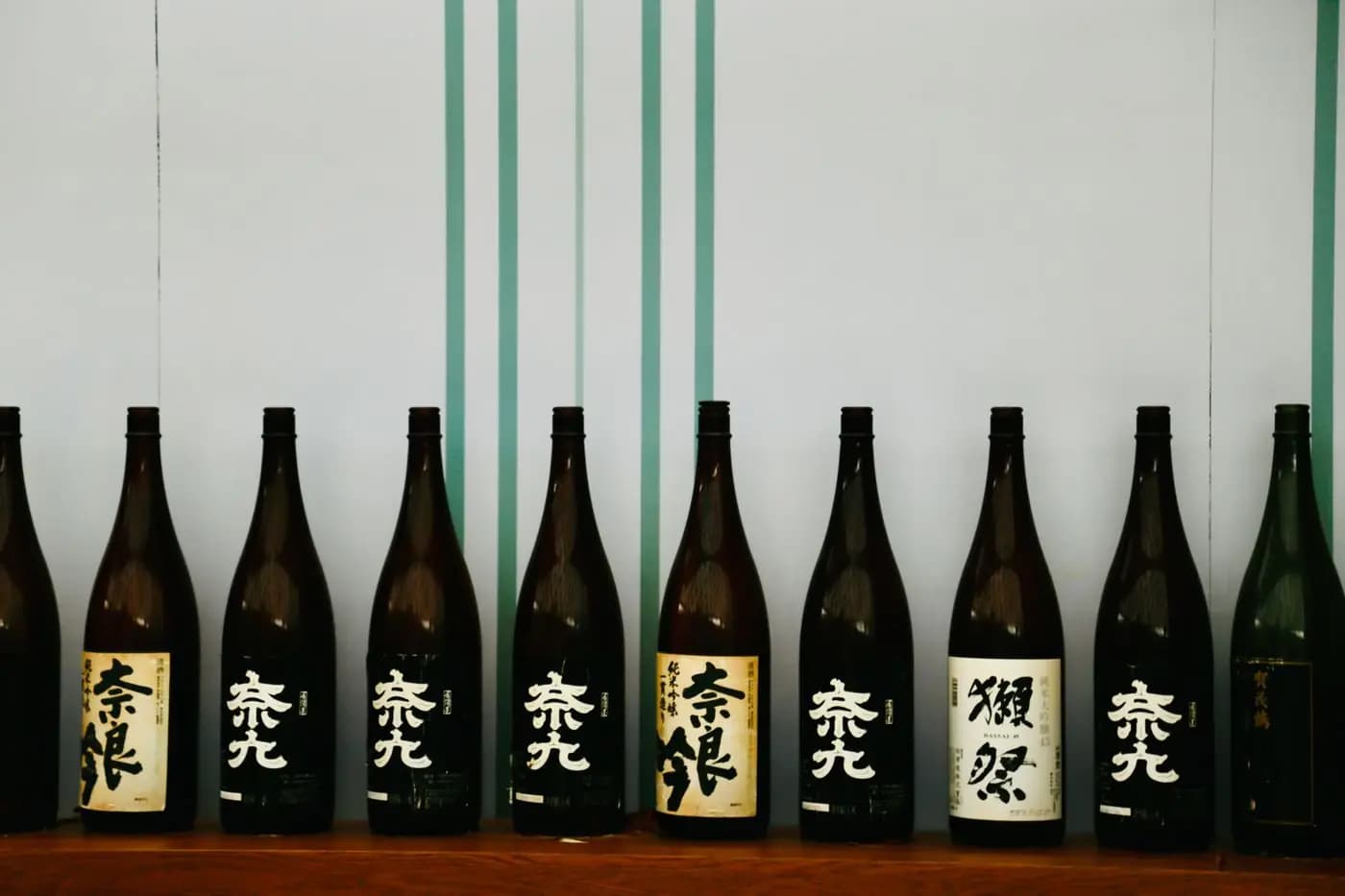
To round off the theme, the Nada district, east of Kobe, is home to historic sake breweries, several of which have a museum and free tasting. It is 15 minutes from Sannomiya and an alternative to Kitano for enthusiasts.
The Arima Onsen option: hot springs near Kobe
Behind the Rokko mountains, about 30 minutes by bus from Sannomiya, Arima Onsen is one of Japan's oldest spa towns, mentioned in 8th-century texts and frequented by Toyotomi Hideyoshi. It is a small hillside town with lanes, shops selling senbei and brushes, and two types of water:
- kinsen ("gold spring"): reddish-brown water, rich in iron and salt, which stains white towels;
- ginsen ("silver spring"): clear water, carbonated or mildly radioactive.
Two public baths let you try them without staying overnight:
- Kin no Yu (gold water): about ¥800 at weekends, a little less on weekdays. Open 8am to 10pm (last entry 9pm).
- Gin no Yu (silver water): similar price, open 9am to 9pm.
A combined ticket covers both. Bring your own towel or buy one on site; tattoos can be an issue in Japanese public baths, so check beforehand.
How to fit it in:
- Short version: after Himeji, swap Kitano for Arima (bus from Sannomiya, or subway + Kobe Dentetsu line, about 40 minutes), bathe, stroll, then return to Kobe for dinner.
- Long version: stay in an Arima ryokan, with a kaiseki dinner and a private or shared bath. Then do Himeji in the morning, Arima in the afternoon, and Kobe the next day. Arima ryokan range from comfortable to very luxurious, with prices doubling at weekends and in autumn.
In summer, Arima is a little cooler than the coast. Autumn, with the maples around Zuiho-ji temple and Arima Tenjin, is the best season.
Himeji and Kobe with a group: organisation
This excursion works very well for groups, provided you take a few constraints into account:
- Castle budget: with the non-resident fee at ¥2,500 (¥2,600 with Koko-en), castle entry weighs more than before in a group budget. Under-18s get in free, which matters for school or family trips.
- The keep: steep stairs and one-way circulation slow everything down. Allow 20 to 25 minutes between two sub-groups of 20 to avoid bottlenecks inside the keep. Participants with reduced mobility tour the courtyards and Koko-en with an escort while the others go up.
- Transport: by private coach, Osaka – Himeji takes about 1.5 hours, Himeji – Kobe 1 hour. The coach parks near the castle and can drop the group at the top of Kitano, avoiding the climb. With a group of 20 to 30, the JR Special Rapid is still faster, outside rush hours.
- Guides: a guide transforms the castle visit, whose defences and history are only partly explained on site.
- Lunch: book the Koko-en restaurant or a room in Himeji; for 40 or more, plan two sittings or a delivered bento.
- Kobe beef dinner: teppanyaki counters rarely seat more than 8 to 12 people per griddle. For a group, spread across several counters in the same restaurant, or choose a venue with private rooms. Menus are set in advance, with cut and weight.
- Arima: ideal for a reward night during a seminar; several ryokan can host an entire group and organise a banquet.
In one day from Osaka or Kyoto, this loop gives a group first-rate heritage, a lively port city and a memorable dinner, without changing hotels. SHINOGI DMC regularly includes it in Kansai incentive programmes, with coordinated guides, coaches and restaurant bookings.
Frequently asked questions
How much is Himeji Castle admission in 2026?
Since March 1, 2026: ¥2,500 for adults 18 and over who do not live in Himeji, ¥1,000 for residents, free for under-18s. The combined ticket with Koko-en costs ¥2,600.
Can you do Himeji and Kobe on the same day?
Yes. Castle and Koko-en in the morning (about 3 hours), a 40-minute JR train to Sannomiya, then Kitano, the port and dinner in Kobe. The return to Osaka takes 25 minutes.
How long does it take to visit Himeji Castle?
Allow 1.5 to 2 hours, plus 40 minutes for Koko-en. At spring peak times, the wait for the keep can add an hour: arrive at 9am.
How do I recognise genuine Kobe beef?
It comes from Tajima cattle born and raised in Hyogo Prefecture that meet strict quality criteria. Approved restaurants display a bronze statuette and can show the numbered certificate for the meat served.
Is Arima Onsen worth the detour from Kobe?
Yes if you enjoy bathing: 30 minutes by bus from Sannomiya, its two public baths (about ¥800) let you try the gold and silver waters. A night in a ryokan is even better.
Is this day trip suitable for a corporate group?
Yes, by private coach or JR train, with sub-groups staggered 20 minutes apart in the keep and a Kobe beef dinner spread across several counters. SHINOGI DMC organises the whole day from Osaka or Kyoto.
Rédaction SHINOGI DMC · Updated
Sources
- Visit Himeji (ville de Himeji) — Révision des tarifs d'entrée du château
- Visit Himeji — Billet combiné château de Himeji et jardin Koko-en
- Ville de Himeji — Château de Himeji (site officiel)
- Time Out Osaka — Himeji Castle raises entry to ¥2,500 for non-residents (mars 2026)
- Kobe Beef Marketing & Distribution Promotion Association — définition du bœuf de Kobe
- Feel KOBE (office du tourisme de Kobe)
- Arima Onsen Kin no Yu / Gin no Yu — horaires et tarifs
- JR West — trains entre Osaka, Kobe et Himeji
- JNTO — Himeji Castle
- Kanpai — Visites au Japon (inspiration)