- Duration
- Half day (3 to 4 hours) or full day (6 to 7 hours)
- Group size
- 4–120 pax
- Cities
- Okinawa
- Indicative budget
- From ¥25,000 per person
Ishigaki is the gateway to the Yaeyama Islands. From the port's ferry terminal, Taketomi is only about fifteen minutes away: a village of low houses with red tiled roofs, coral stone walls and white sand streets, explored on foot, by bicycle or in a cart drawn by a water buffalo. Between Ishigaki and Iriomote lies the Sekisei Lagoon, Japan's largest coral reef, where guides pick a snorkeling site each morning according to wind and current.
With a private boat, the group builds its own day: Taketomi in the morning before the scheduled ferries arrive, lunch on board or on a beach, snorkeling in the afternoon, return at sunset. Large groups charter several boats sailing together, with a coordinator and snorkeling guides on each. For a leadership committee, a single boat of 10 to 20 seats is enough, and the day can include time for discussion in the shade on the beach.
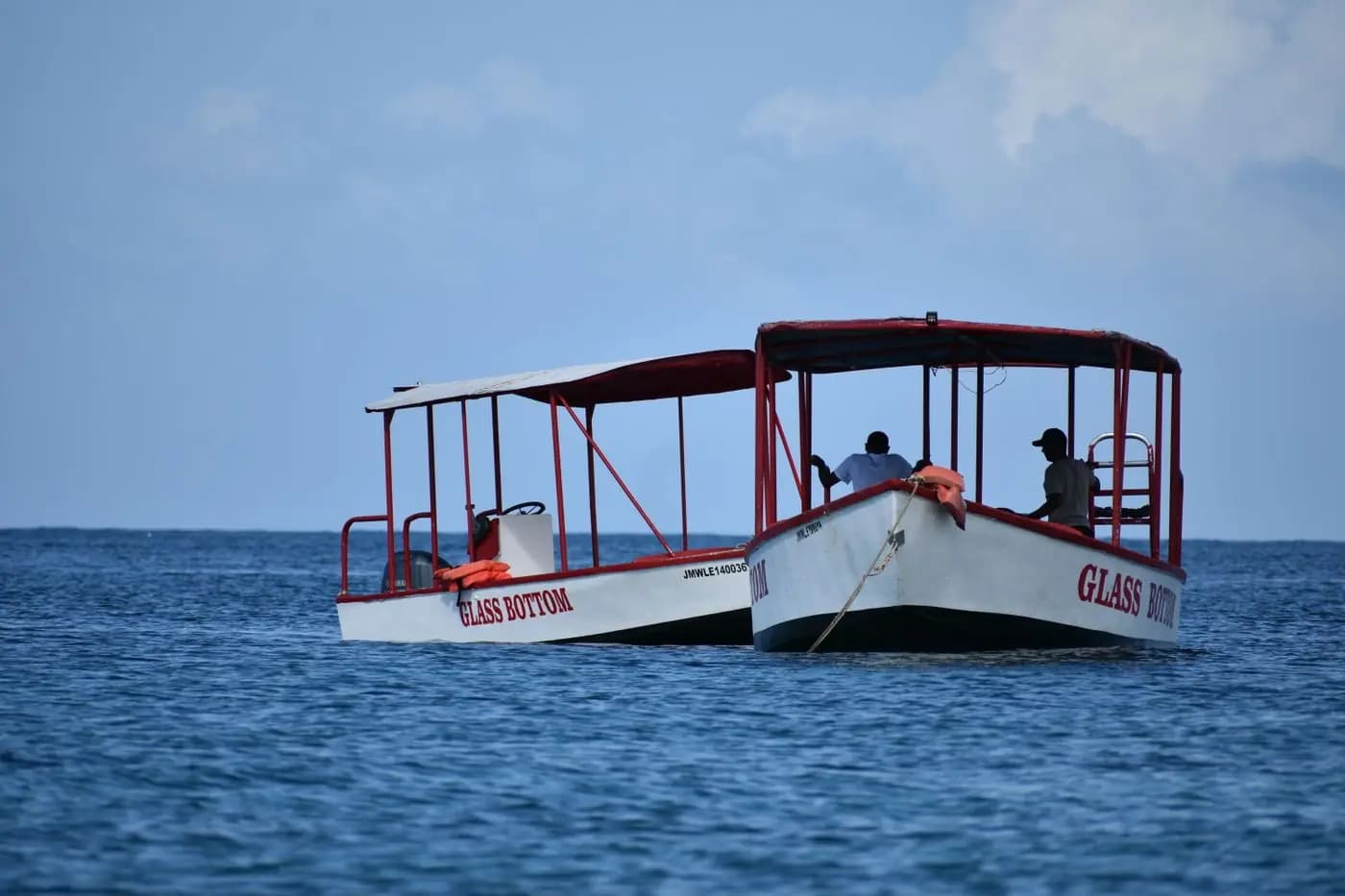
On Ishigaki's northwest coast, Kabira Bay often completes the program. Its turquoise water and wooded islets make it the island's most famous view, but swimming is not allowed there because of currents and boat traffic: it is explored by glass-bottom boat, about half an hour above the coral and fish, then from the lookout.
Objectives
- Offer an exceptional day at sea reserved for the group alone
- Introduce the culture of the Yaeyama Islands and Japan's largest coral reef
- Reward participants with a program free from scheduled ferry timetables
How it works
- 1The day before: final route chosen with the captain according to wind and swell forecasts.
- 2Boarding at Ishigaki Port, safety briefing and snorkeling equipment handed out.
- 3Stop in Taketomi: the village, a buffalo cart or bicycles, Kondoi Beach.
- 4Lunch on board or on a beach, then guided snorkeling at a site in the Sekisei Lagoon.
- 5Option: Kabira Bay by glass-bottom boat and the lookout, by coach from the port.
Good to know
- Life jackets for everyone; one snorkeling guide per 6 to 8 swimmers, wetsuits and masks provided.
- Non-swimmers stay on board, enjoy the beach or the glass-bottom boat.
- Best from April to October; typhoon risk mainly from August to October, cooler sea and north wind in winter.
- Capacity: 10 to 40 passengers depending on the boat; beyond that, several boats sail together.
- Plan B in rough seas: the scheduled ferry to Taketomi, which runs in more conditions, or a day on land with Kabira Bay, a minsa weaving workshop and an Ishigaki beef lunch.
Indicative budget
From ¥25,000 per person (half day on a private boat with crew and snorkeling guide, based on 10 people, equipment included), as an indication. Lunch, the Taketomi stop and Kabira Bay extra; group rates and multi-boat charters on request.
Frequently asked questions
Can we swim in Kabira Bay?
No, swimming is not allowed there because of currents and passing boats. It is explored by glass-bottom boat and from the lookout. For swimming, we take the group to the Sekisei Lagoon or an approved beach.
How many boats are needed for 100 people?
Usually three to four boats of 25 to 40 seats, sailing as a flotilla and docking at staggered times to avoid waiting. Each boat has its SHINOGI coordinator and guides, and the groups meet for lunch on the same beach.
What if the sea is too rough?
The captain decides the day before and on the morning itself. If the private boat cannot go out, we switch to the scheduled ferry to Taketomi, which is larger and more stable, or to a land program already prepared. Where possible, we move the boat day to another day of the stay.
Is snorkeling suitable for beginners?
Yes. Guides choose shallow, sheltered sites, hand out vests or floats and stay in the water with the swimmers. A first dip near the boat lets everyone get used to the mask before heading to the reef.